Research
Mitochondrial Calcium Signaling
Calcium is a universal cellular messenger, and mitochondria are both important recipients and regulators of calcium signals. Calcium enters the mitochondrial matrix through the mitochondrial calcium uniporter complex, where it coordinates energy production and metabolism with changing cellular demands. However, excessive or improperly regulated calcium uptake can disrupt mitochondrial function and contribute to disease. Our laboratory investigates how mitochondrial calcium transport is controlled, which mitochondrial pathways respond to calcium, and how altered calcium signaling reshapes cellular metabolism in physiological and disease settings.
Our work has helped define the molecular machinery responsible for mitochondrial calcium uptake. We contributed to the identification of MCU as the channel-forming component of the uniporter and discovered EMRE, an essential subunit that enables MCU activity and connects the channel to its calcium-sensing regulators, MICU1 and MICU2. Subsequent studies from our group have examined the architecture, evolution, regulation, and physiological functions of this complex, revealing how its components work together to control calcium entry into mitochondria.
We are also expanding the known landscape of calcium-regulated biology. Using the high-throughput Protein Integral Solubility Alteration, or PISA, approach, we identified nearly 2,900 candidate calcium-regulated proteins across human, mouse, and yeast proteomes. These studies uncovered previously unrecognized calcium-responsive pathways and showed that calcium can directly regulate the mitochondrial fatty-acid-oxidation enzyme DECR1. In parallel, our work in fibrolamellar carcinoma demonstrated that elevated mitochondrial calcium suppresses branched-chain amino acid catabolism and the urea cycle through the metabolic transcription factor KLF15. Together, these findings establish mitochondrial calcium as a broad regulator of metabolic state—not simply a stimulus for energy production—and provide a foundation for understanding how disrupted calcium signaling contributes to cancer and other human diseases.
Mitochondria–Organelle Crosstalk
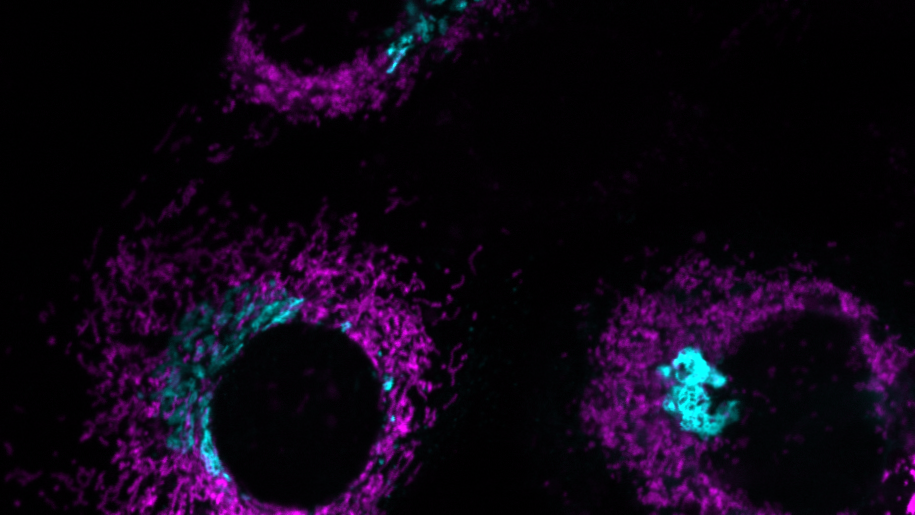
Mitochondria operate within a highly connected cellular environment, forming dynamic contact sites with the endoplasmic reticulum, lysosomes, lipid droplets, and other organelles. These interfaces create specialized regions where metabolites, lipids, ions, and signals can be exchanged rapidly and precisely. Our laboratory is interested in understanding how the organization of these contacts influences mitochondrial function and allows cells to coordinate activities across distinct organelles.
We are developing approaches to identify and characterize mitochondrial subpopulations based on their interactions with other cellular compartments. Through this work, we aim to determine how organelle contacts shape mitochondrial calcium signaling, metabolism, lipid homeostasis, and responses to cellular stress. We are particularly interested in how contact-site composition and function change across cell types, physiological states, and disease conditions. Ultimately, our goal is to uncover the molecular principles that govern communication between organelles and understand how disruption of these networks contributes to human disease.
Mitochondria Transfer
Mitochondria transfer—the movement or transplantation of functional mitochondria between cells or tissues—is an emerging area of biology with exciting therapeutic potential. Delivering healthy mitochondria to injured tissue may provide a way to restore metabolic capacity during acute conditions in which mitochondrial function is compromised. Our laboratory is working to understand the fundamental biology of extracellular and transplanted mitochondria and to address the practical challenges that must be overcome before mitochondrial transfer can be developed into a reliable therapeutic strategy.
This research is carried out in close collaboration with physicians. Together, we combine expertise in mitochondrial biology with clinical experience in the treatment of ischemic stroke. Our collaborative studies examine how mitochondria can be isolated and delivered during clinical procedures, how commonly used medications affect their viability, and how transplanted mitochondria can be tracked in the body using clinically compatible imaging approaches. By bringing basic scientists and medical doctors together, we aim to build the mechanistic and technical foundation needed to evaluate mitochondrial transfer safely and rigorously—and to determine where it may ultimately offer the greatest benefit to patients.